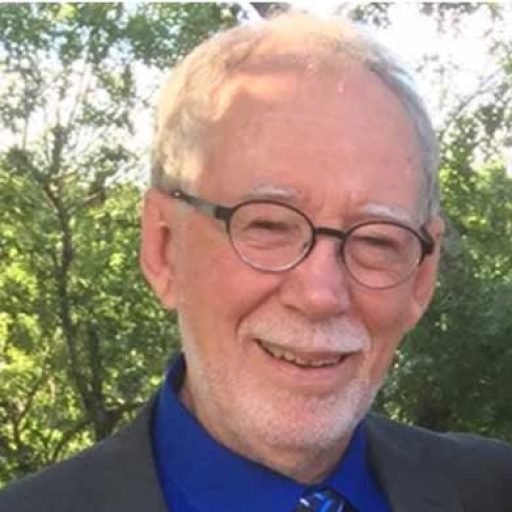
Miracle Healings in the Bible and in Medical Science.

I was raised in a Methodist church in Australia. We talked about miracles in the Bible with great interest. But didn’t pray for miracle healings, as I recall.
When I fell in love, my partner took me to a Pentecostal church who definitely believed in healing miracles. The Church taught me to ask for and receive spiritual experience, which I did. This cemented my faith. So we would pray for healing of almost any problem, but to be honest, miracle healings were rare.
As I continued through life in my new-found faith, I prayed readily for myself and for others. In the US, where my career took off, I met and worked with two scientist colleagues in Tulsa, Oklahoma. Early one morning, one colleague said he had a bad back problem, and I spontaneously said, “Would you like me to pray for you?” He said yes, and as I put my briefcase on the floor, he raised his two arms horizontally and placed his hands on my shoulders. That was a surprise.
One prayer and one miracle in Tulsa.
I prayed that he would find relief from the pain, in Jesus’ name, and had to dry my eyes from the tears. We went on and spent the day working on a petroleum engineering project.
I returned to Tulsa about two weeks later, and asked him how his back was doing. He said he wanted to discuss this at lunch. At a Mexican restaurant near downtown Tulsa, he told me his back pain had gone away after we prayed. And he wanted to know how this had happened. All I could say was God did it, not me. And I recited other miracles of healing that are recorded in the Bible. I also suggested a good Methodist church in south Tulsa that he might visit to find out more about faith and prayer.
This was the clearest example of a miracle of healing that I have personally witnessed up close, and it happened to a scientist with a PhD, no less. The miracle was also witnessed by an independent person — another scientist with a PhD — who was there to see the prayer, and to verify the healing result.
Healing miracles seem to be rare.
I wondered how often miracles of healing occurred in the Bible record. In three years of Jesus’ ministry, there must have been at least 100 such healing miracles, maybe more. Let’s say 150 healing miracles occurred in about 150 weeks. This means one healing miracle per week at the hands of Jesus.
What about the Old Testament? I’m guessing perhaps 100 healing miracles written down and recorded over 1000 years between the time of King David and the time of Jesus. This amounts to one healing miracle every 10 years.
In the famous Catholic sanctuary at Lourdes, France, thousands of healings have been reported since 1858, when the Virgin Mary appeared to Bernadette Soubirous. The Catholic Church has recognized 72 of these healings as miraculous, as vetted by the Lourdes Office of Medical Observations, which collaborates with international medical committees to ensure each healing is medically inexplicable.
One of these was a woman of age 83, who essentially could not walk. After her healing at Lourdes, her bones straightened and she could walk almost normally, as was demonstrated on the reliable TV show called “60 Minutes”.
Recently I’ve become aware that some medical scientists are documenting faith-connected miracles of healing. This is important for religious believers because scientific research entails findings that have to be verified or verifiable to be regarded as true. One example of verified healing miracles is given below. You can click on the link to find more information.
Young girl healed of macular blindness.
‘An 18-year-old female lost the majority of her central vision over the course of three months in 1959. Medical records from 1960 indicate visual acuities (VA) of less than 20/400 for both eyes corresponding to legal blindness.
When the couple went to bed later than normal (after midnight), her husband performed a hurried spiritual devotional practice (reading two Bible verses) and got on his knees to pray. She describes that they both began to cry as he began to pray, with a hand on her shoulder while she laid on the bed, and with great feeling and boldness he prayed: “Oh, God! You can restore […] eyesight tonight, Lord. I know You can do it! And I pray You will do it tonight.” At the close of the prayer, his wife opened her eyes and saw her husband kneeling in front of her, which was her first clear visual perception after almost 13 years of blindness.
The patient reported, “The only healings we knew about were in the Bible”. She indicated that her husband had never before prayed for someone who subsequently experienced a remarkable recovery. Their only prior experience with prayer for healing seems to be when the patient and her husband had briefly visited the meeting of a well-known healing evangelist, but they left before the time in the meeting when the healing practices began.
The patient and her husband were involved with a Baptist church at the time that did not practice the laying on of hands while praying for the sick. They also did not practice glossolalia, nor fasting, which are more commonly associated with Pentecostal or Charismatic sects that believe miraculous healings happen in the present age as opposed to only in the ancient world. Regardless, their church community took note of the healing and interpreted it as a gift from God.
To date, the woman’s eyesight has remained intact for forty-seven years.’
In conclusion.
I am reminded of the evangelist, Oral Roberts, who built an undergraduate university in Tulsa, Oklahoma, which opened in the late 1960s. He had a vision of a City of Faith which would contain a hospital where spiritual healing would be merged with practical medicine in a more powerful healing process. The hospital vision has not emerged. But the story above does point to a future where studies of healing miracles in science and medicine are moving toward a merging of faith and traditional healing. Perhaps Oral Robert’s vision will yet come true.
Also – I think it is good to pray for a miracle, even if they are rare. We are encouraged to pray about everything, and prayer keeps us centered on God that we believe in.
+++++++++++++++++++++++++++++++++++++
They came to Jericho. As he and his disciples and a large crowd were leaving Jericho, Bartimaeus son of Timaeus, a blind beggar, was sitting by the roadside. When he heard that it was Jesus of Nazareth, he began to shout out and say, ‘Jesus, Son of David, have mercy on me!’ Many sternly ordered him to be quiet, but he cried out even more loudly, ‘Son of David, have mercy on me!’ Jesus stood still and said, ‘Call him here.’ And they called the blind man, saying to him, ‘Take heart; get up, he is calling you.’ So throwing off his cloak, he sprang up and came to Jesus. Then Jesus said to him, ‘What do you want me to do for you?’ The blind man said to him, ‘My teacher, let me see again.’ Jesus said to him, ‘Go; your faith has made you well.’ Immediately he regained his sight and followed him on the way.
[Mark, chapter 10]
Discover more from Ian Dexter Palmer Ph.D
Subscribe to get the latest posts sent to your email.